A Photographer's Guide to Cumberland Falls, Kentucky
Cumberland Falls is one of those places that surprises people who did not know Kentucky had it. Tucked into the Daniel Boone National Forest near Corbin, it drops about seventy feet and runs a hundred and twenty five feet wide, which is why people call it the Niagara of the South. I have shot it in a few different conditions now, and it rewards you for showing up early and for paying attention to the season. Here is how I approach it.
GETTING THERE
The park sits at 7351 Highway 90 in Corbin, about two hours south of Lexington and roughly two and a half hours from Louisville. It is an easy drive, and the last stretch through the forest is pretty in its own right, honestly one of the prettiest drives in Kentucky.
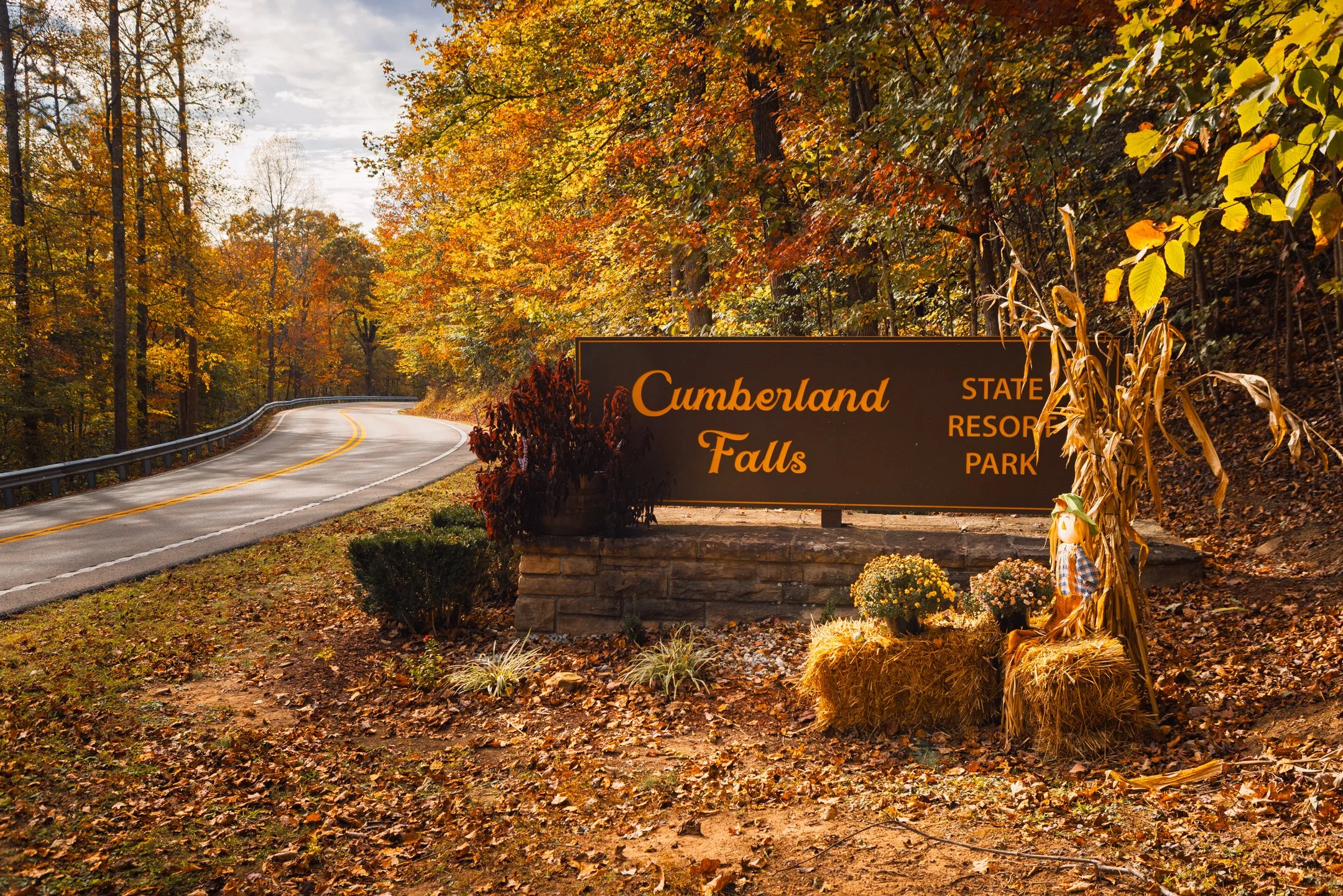
This sign is what greets you on the way down, and the road just past it winds through a corridor of trees that puts on a show in autumn. Worth slowing down for, camera or not.
There is a main parking area right by the falls, so you are not looking at a long hike to reach the classic view. One thing worth knowing for 2026: DuPont Lodge is closed for renovation through the fall, but the cabins, cottages, and campground are still open if you want to stay the night. I would recommend it if you are chasing early light or the moonbow.
WHERE TO SHOOT IT
There are a few vantage points, and each one gives you a different photo.
The main overlook sits directly across from the falls and is paved and easy to reach. This is your classic head-on view of the whole falls, and it is where the wider shots come from.
From there, a boardwalk carries you along a series of numbered viewing decks, and it is worth working your way down all of them instead of stopping at the first one. Each deck shifts your angle on the falls just enough to change the composition.
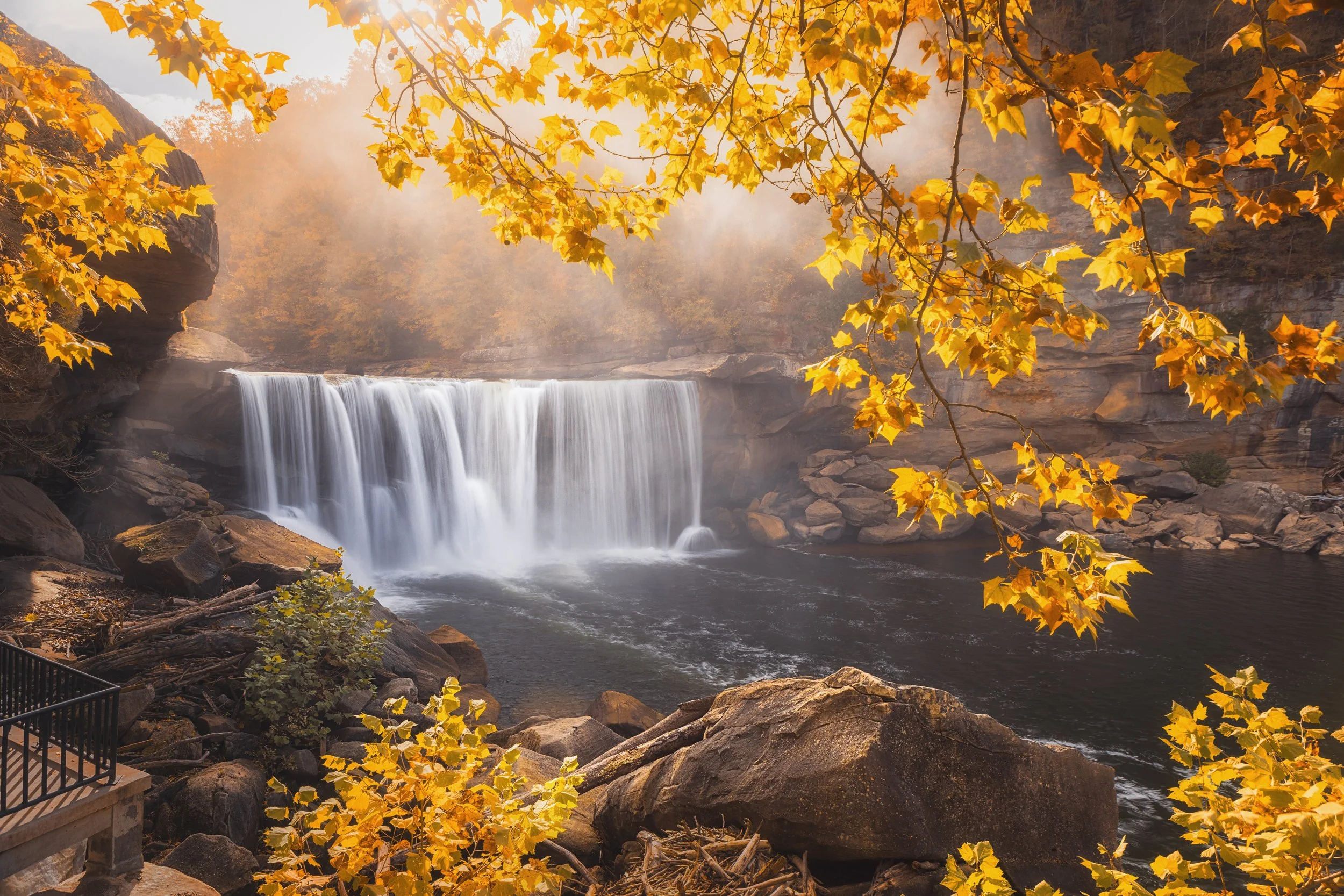
The second deck is a good one to slow down at, especially as the light starts to lower. Autumn leaves hang into the frame here and give you a natural border around the falls.
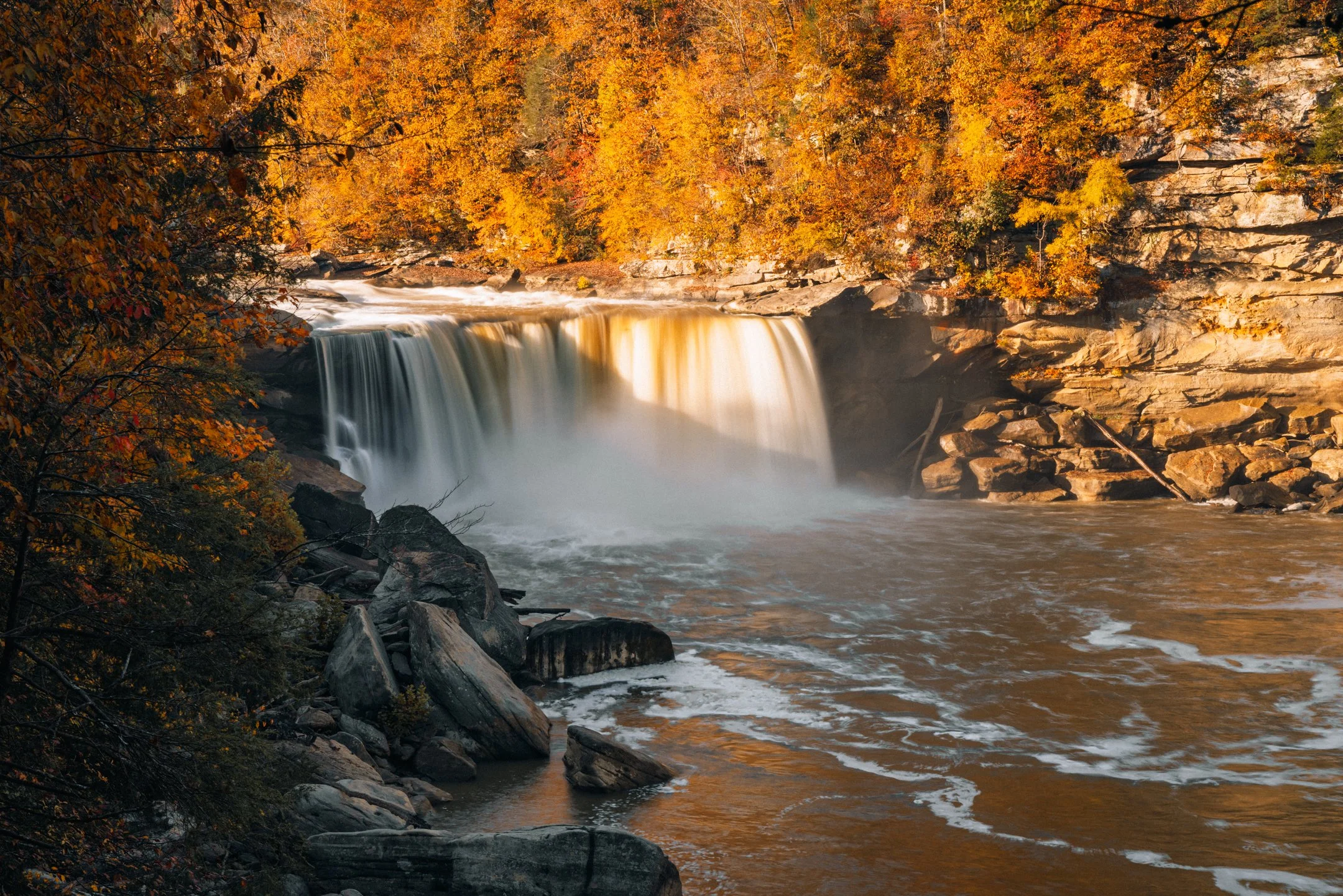
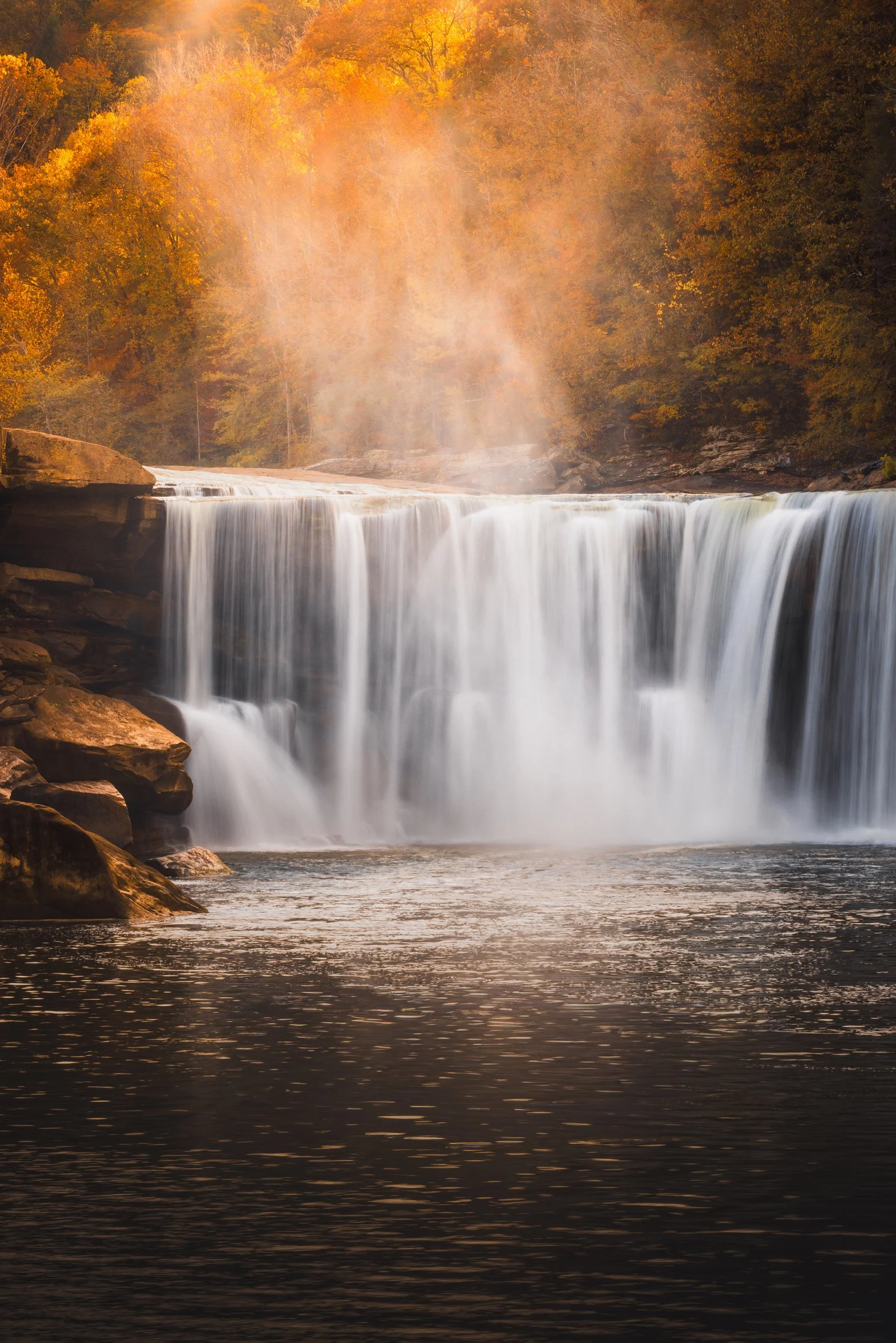
Between the second and third decks there is a spot that pulls you in tighter on the water itself, and in good light the spray catches a warm glow that is worth stopping for.
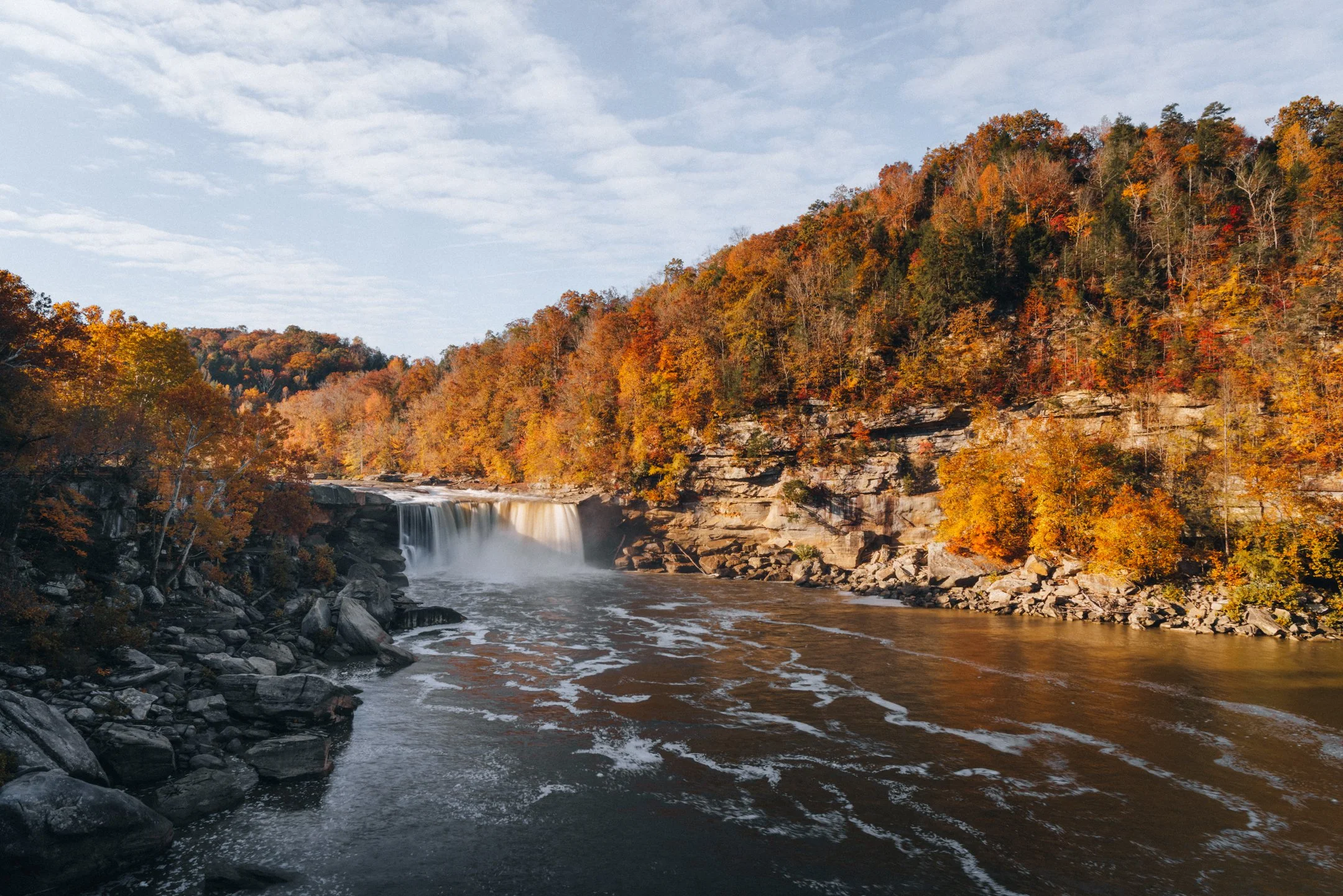
By the fourth deck you have pulled back and gained some elevation, and the shot becomes more about the gorge and the scale of the place than the falls alone. It is a nice bookend to the tighter shots closer in.
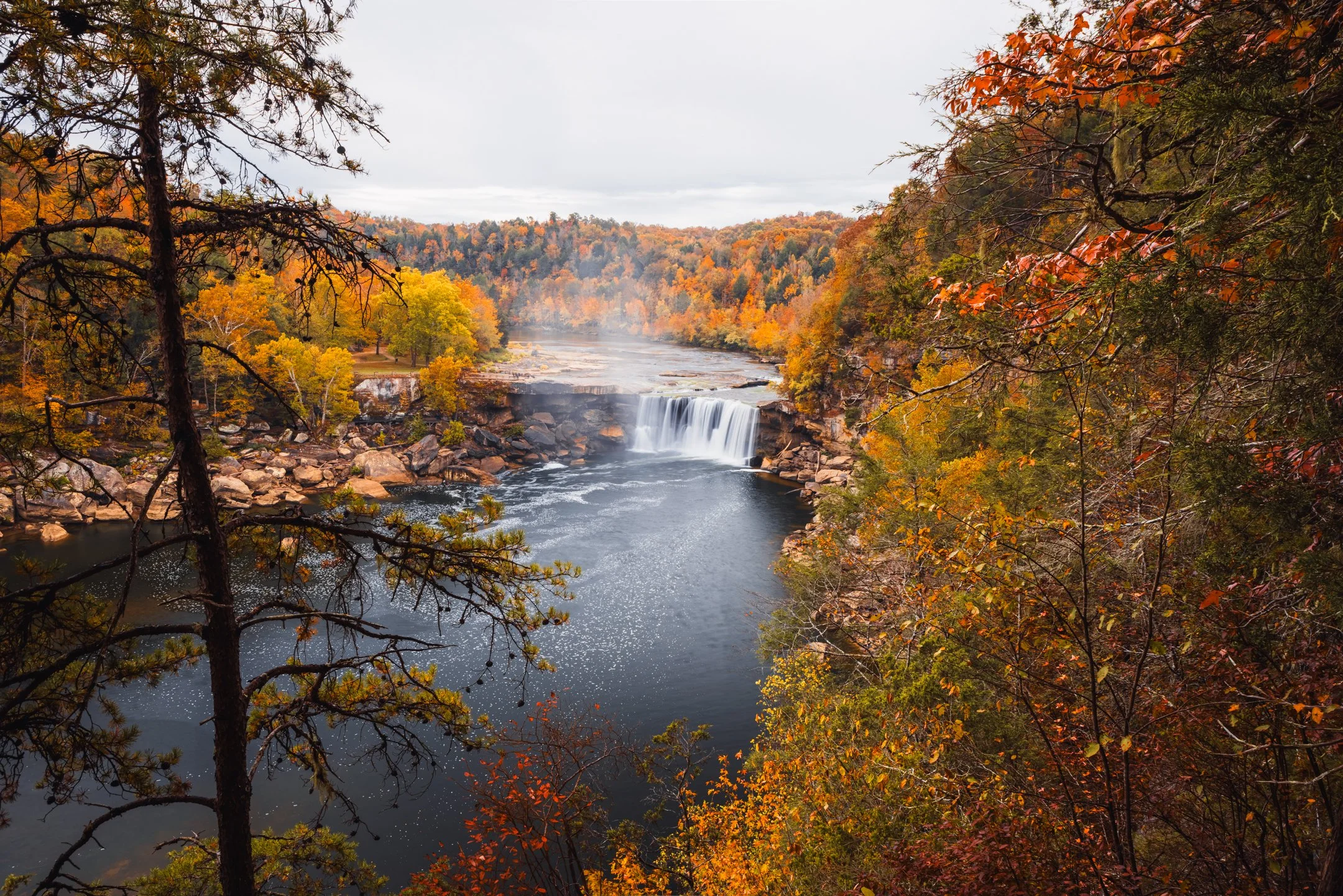
The Eagle Falls trail runs across the river and gives you a side angle looking back at the main falls. It is a short but real hike with some up and down, and the payoff is a perspective most visitors never bother to get. That side of the river is where the overlook shot at the top of this post comes from.
DOWN AT THE WATER
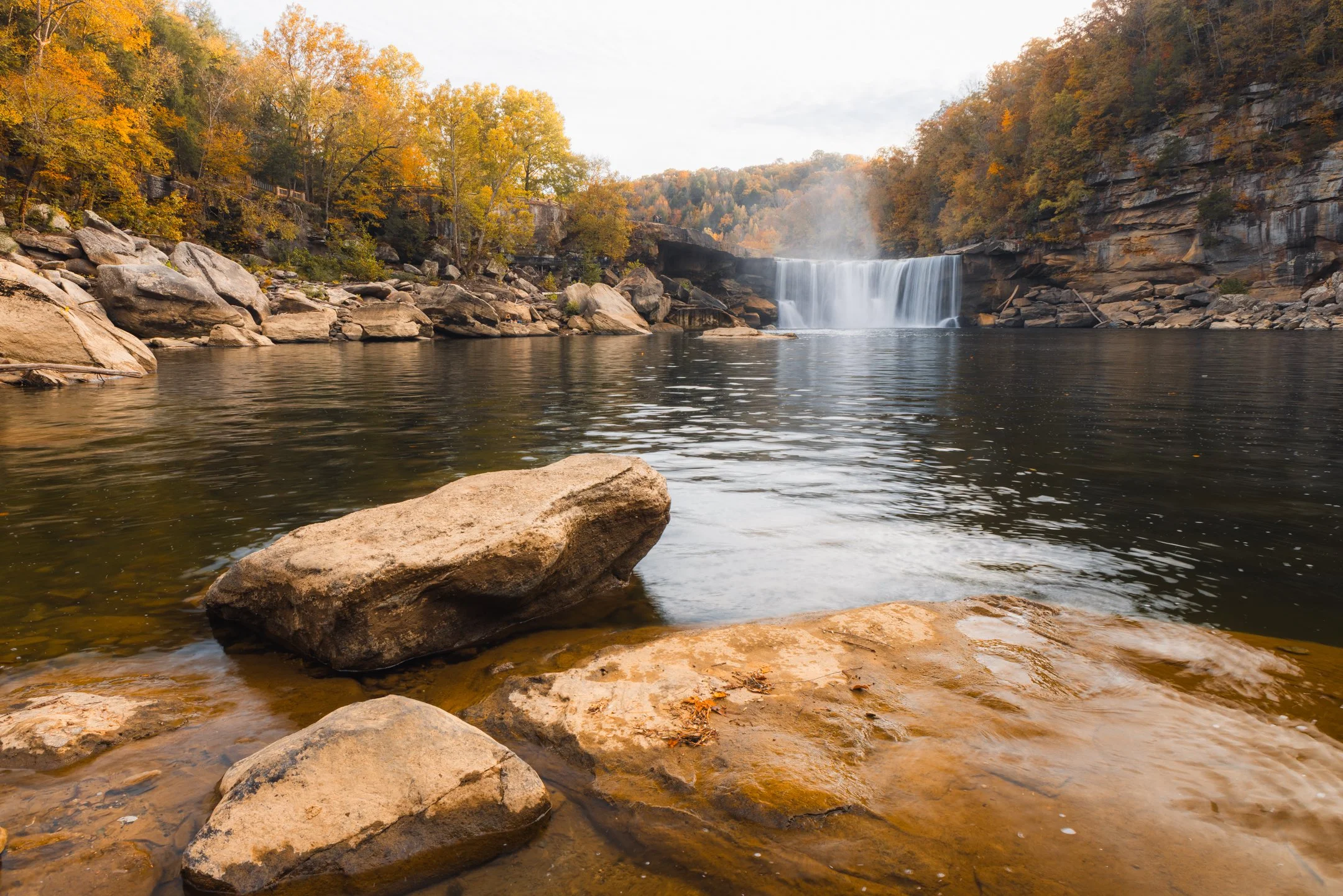
If you are willing to walk down to the beach area along the river, you get a completely different perspective on the falls, one that puts you at water level instead of looking down from above. Climb out onto the rocks if you are comfortable doing so and they make a strong foreground element, something solid and textured to lead the eye toward the falls. I would also recommend getting low here, closer to the water, for a tighter shot that feels more intimate than anything you can get from the main overlooks.
THE GATLIFF MEMORIAL BRIDGE
The Gatliff Memorial Bridge is one of the more underrated subjects in the park, and it rewards the same early start that pays off at the falls. On a cool morning the fog settles low over the river and drifts through the arches, and with the sun coming up behind it you get shafts of light cutting through the mist. It is a quiet, almost painterly scene, and a nice change of pace from the falls themselves.
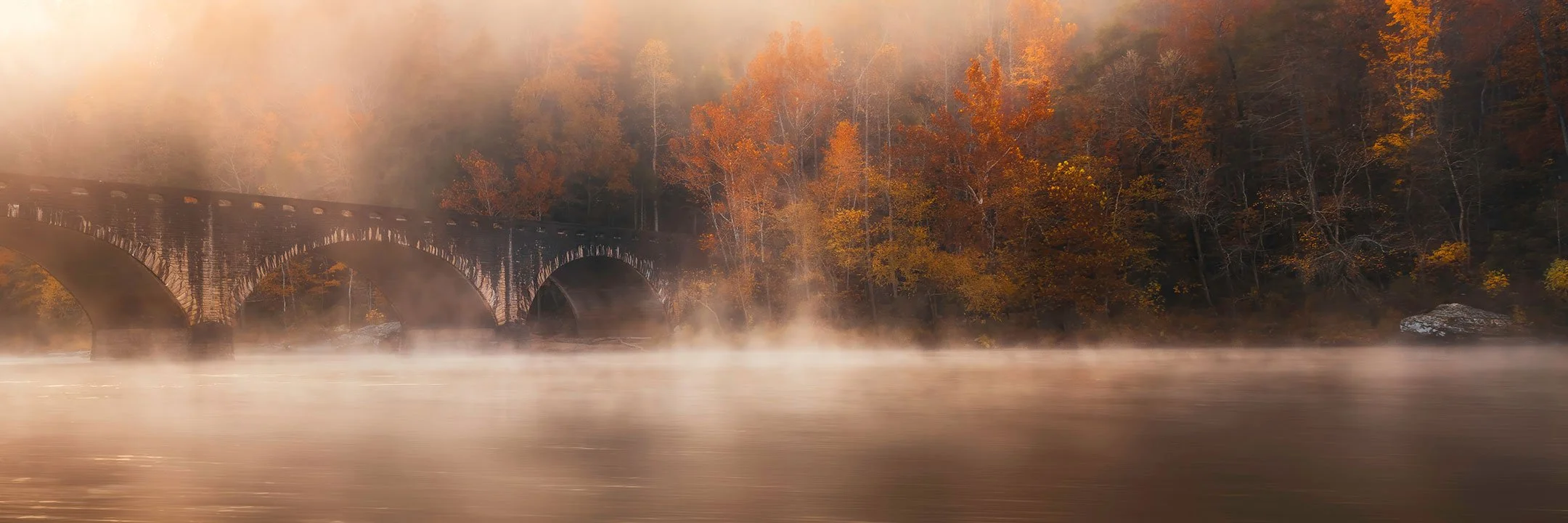
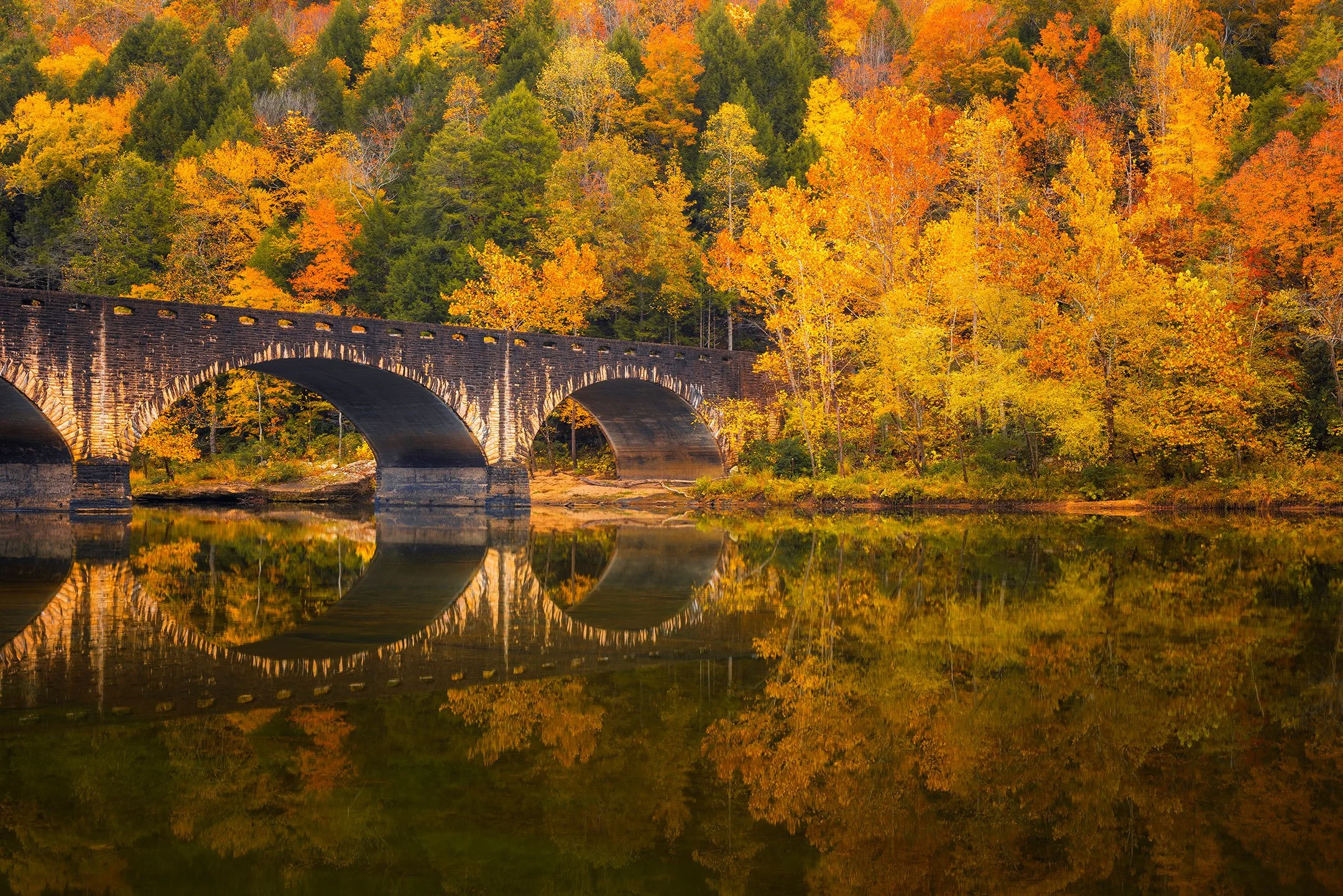
On a calmer day, when the water is still, the bridge and the surrounding fall color reflect almost perfectly, and the arches double themselves in the river. This one works well as a symmetrical composition, so it is worth taking a minute to level the horizon and center the reflection before you shoot.
BEST TIME OF THE DAY
Morning is my pick. On cool mornings you get mist rising off the base of the water, which photographs beautifully and softens the harsher midday contrast. That misty look is worth setting an alarm for. Overcast days work well too, since the even light lets you shoot longer exposures on the water without blowing out the highlights. I usually bring a tripod and a polarizer to cut glare on the wet rock and slow the shutter down.
BEST SEASON
Mid to late October is the sweet spot. That is when the surrounding forest peaks, and Cumberland Falls with fall color behind it is a completely different photo than the same falls in summer green. Spring is good too, with heavier water flow after the rains. Summer is the busiest and the greenest, and winter can be dramatic and quiet if you catch it after a cold snap.
BONUS HIKE: DOG SLAUGHTER FALLS
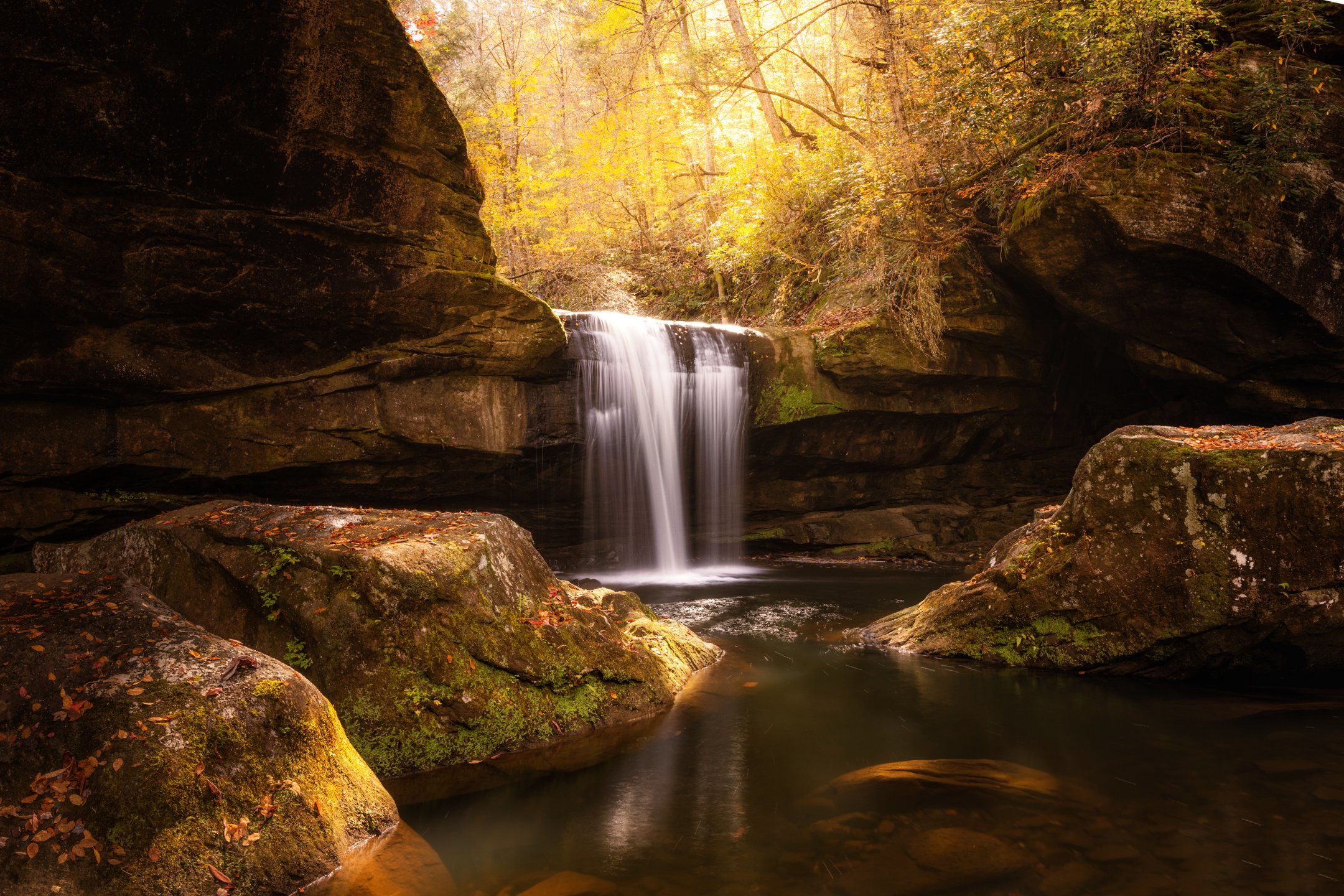
If you have extra time and want to get away from the crowds at the main overlooks, the hike out to Dog Slaughter Falls is worth the detour. It is a fun, occasionally challenging trail, and for most of its length it is unmarked, so you likely will not run into many other people.
The short route runs about 2.5 miles round trip with roughly 265 feet of elevation gain, taking most people an hour to an hour and a half. It follows Dog Slaughter Creek through dense stands of hemlock and rhododendron, working over and around large boulders before reaching the falls, a fifteen foot drop into a pretty plunge pool right where the creek meets the Cumberland River. Expect roots, rocks, and a few short steep sections, so sturdy shoes matter more than they might for the paved overlooks back at the main park. There is also a longer version of the hike that connects from Cumberland Falls itself via the Sheltowee Trace Trail, which runs closer to 5.8 miles round trip with more elevation gain if you want to make a full day of it.
Photographically, it is a completely different mood than the main falls: tighter, greener, and a lot more intimate. Worth the extra miles if you ask me.
THE MOONBOW
This is the thing Cumberland Falls is truly famous for, and it is worth planning around. On clear nights around the full moon, moonlight hits the mist at the base of the falls and forms a moonbow, which is a rainbow made by the moon instead of the sun. Cumberland Falls is the only place in the Western Hemisphere where this happens on a regular, predictable schedule.
The park publishes the viewing dates and rough times for each month on its official channels, so check those before you build a trip around it. A few things I would pass along. You need clear skies, since clouds will kill it. The timing follows the moon, so some nights the viewing window is very late. Bring warm layers and a red or low light flashlight to protect everyone's night vision, and skip the flash. For photos you will want a tripod and a long exposure.
A COUPLE OF LAST THINGS
Give yourself more time than you think you need, especially if you want the falls, the bridge, the beach area, and the moonbow all on the same trip. And be friendly at the overlooks. On the popular nights it gets crowded, and sharing the good spots goes a long way.
If you want to bring a piece of it home, prints of Cumberland Falls are available in my Kentucky gallery.